
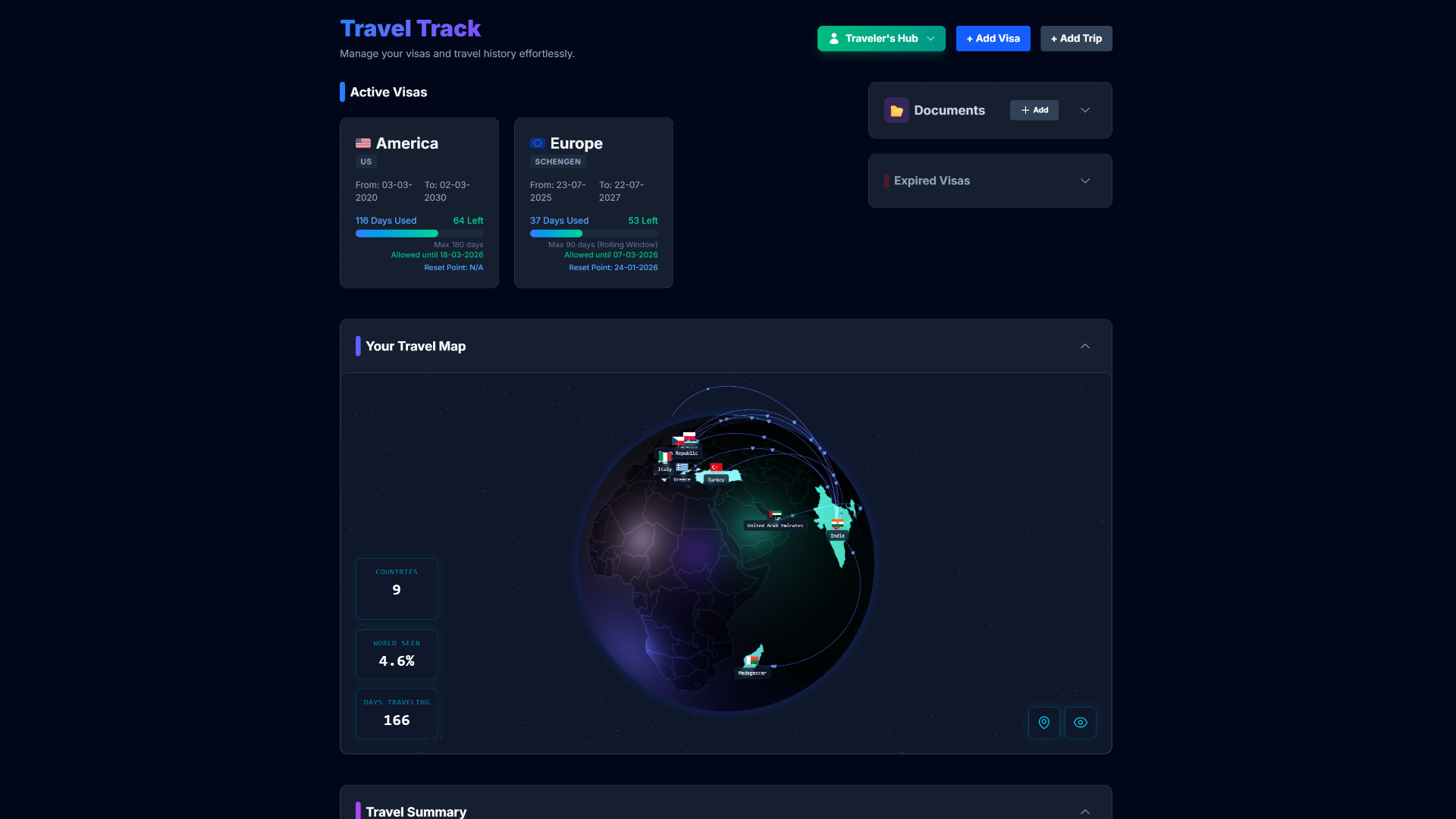
Travel Track AI is a visa and travel-days tracking app built for frequent travelers, digital nomads, planners, and explorers who want to stay compliant without constantly second-guessing dates, limits, and rules.
The goal is to provide a single source of truth for tracking travel days across different visa categories, regions, passports, and nationalities — including automated calculations, overstay alerts, and visibility into what countries open up through popular visas like the US or Schengen.
This is a solo-developed project, originally built to solve my own travel problems, and now evolving into a potential product for real users.
Why I Started Building This?
If you travel often — especially across regions with strict visa rules — tracking allowed days quickly becomes stressful.
Different countries count days differently.
Some visas unlock additional travel options.
Overstaying even by accident can have serious consequences.
Surprisingly, there isn’t a reliable, centralized tool that:
- Handles multiple passports and nationalities
- Accurately calculates rolling travel days
- Warns users before they overstay
- Helps travelers with weaker passports plan smarter routes
Travel Track AI exists to solve exactly that.
How This Project Started (And How Fast It Grew)
I started working on Travel Track AI part-time shortly after Christmas 2025. What began as a small personal experiment quickly grew into something much more structured — and much more ambitious.
There wasn’t a detailed roadmap at the beginning. The project started as a simple travel days calculator, built to answer a recurring question:
“How many days have I actually used, and how many do I really have left?”
From there, the scope expanded naturally:
- Linking travel dates to specific visas
- Supporting different counting rules (like Schengen’s rolling 90/180 rule)
- Connecting multiple trips across countries
- Automatically calculating used and remaining days
Each new feature revealed another missing piece — and the tool slowly evolved into a system rather than a calculator.
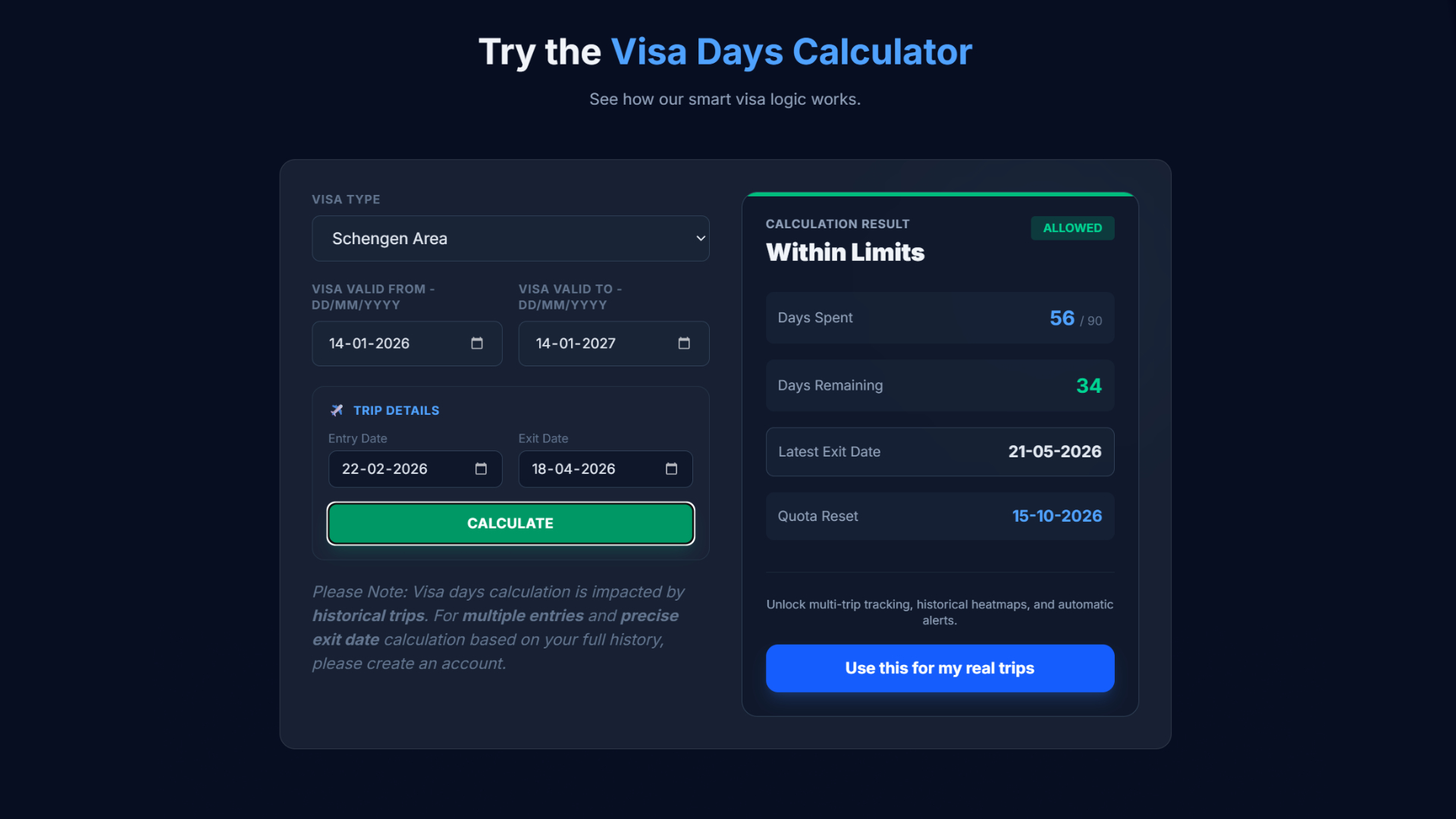
First Real Technical Milestone: Travel Days Calculation
The first major technical challenge was building a reliable and flexible date calculation engine.
Visa rules are deceptively complex:
- Schengen operates on a rolling 90 days within any 180-day window
- Other visas allow fixed 180-day or yearly limits
- Trips can overlap, span regions, or reset based on exit dates
Designing a system that handled these rules correctly — and could be extended later — took more time than expected. Getting this right was critical, since every other feature depends on trustworthy calculations.
Adding a Visual Layer: The Three.js Earth
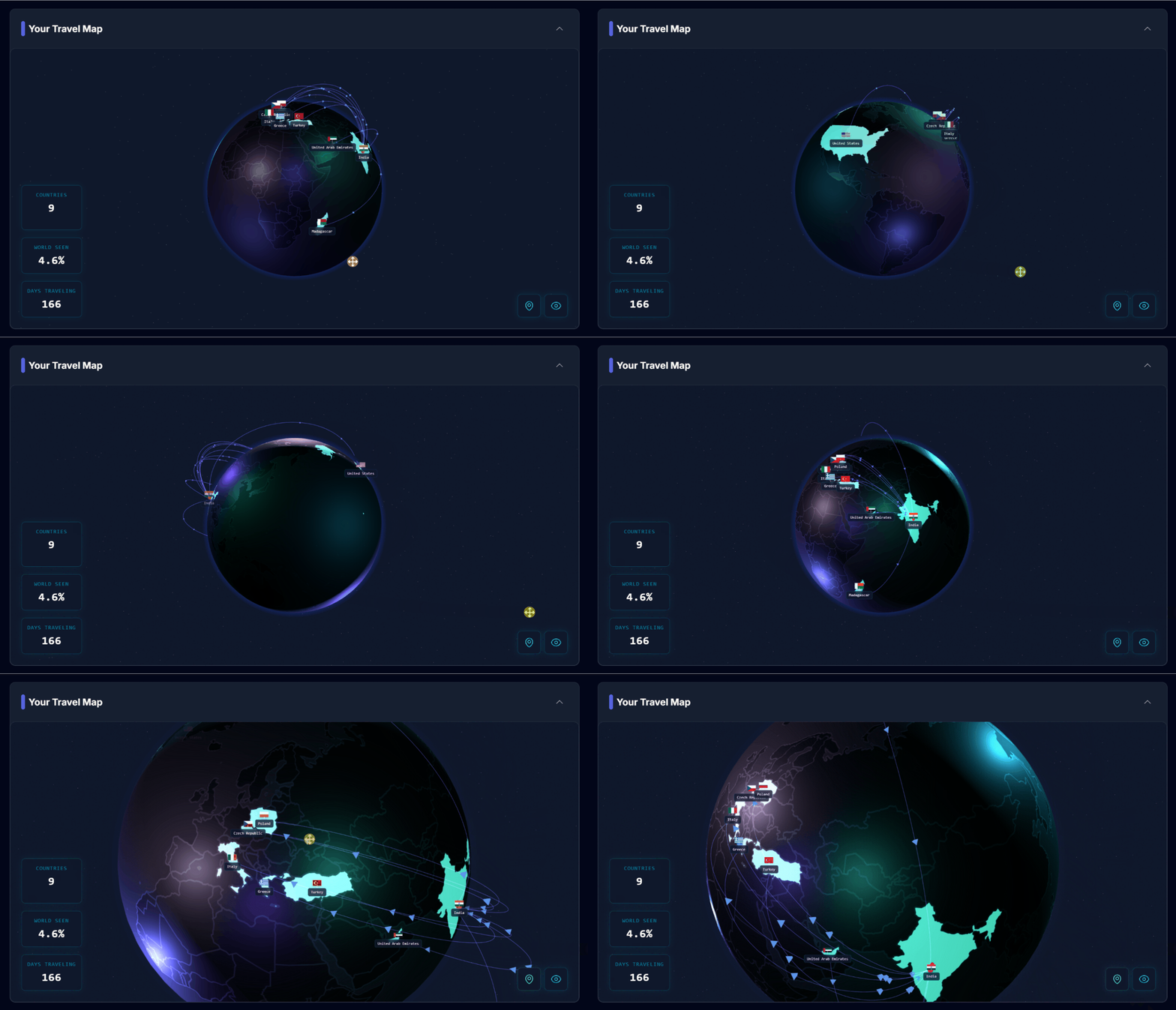
One of the next major milestones was adding a Three.js-powered interactive globe.
Coming from a 3D artist background, learning how to bring 3D into the web was both challenging and genuinely fun. The goal wasn’t just visual flair — it was about making travel data feel intuitive and spatial.
Trips are mapped onto a 3D globe with visible routes, helping users:
- See how much they’ve traveled
- Understand how historical trips affect visa limits
- Feel a sense of accomplishment in their journey
This was a turning point where the app began to feel like an experience, not just a utility.
Choosing a Name and Domain
I knew early on that if this were to become a real product, the name needed to be clear and memorable.
Travel Track AI felt right:
- Travel defines the space
- Track explains the core function
- The name doesn’t need explanation
I initially looked for a .com or .io, but those domains were unavailable and appeared parked. As a third option, I explored .ai domains. Given the long-term plan to integrate AI-assisted features, traveltrack.ai felt like the right choice.
.ai domains are expensive, so purchasing it was a deliberate commitment — a moment where the project crossed from experimentation into something more serious.
Why Firebase Made Sense
As a solo developer learning while building, I wanted an all-in-one platform that emphasized:
- Security and privacy
- Scalability
- Developer experience
- A generous free tier
Firebase fit those needs well, especially within the Google ecosystem.
Currently, the app uses:
- Firebase Authentication (Google, Apple, Email)
- Firestore for structured travel and visa data
- Firebase Storage for documents
- Firebase Hosting for deployment
Cloud Functions are planned for future automation and advanced logic.
Designing the Data Model (With Privacy in Mind)
One of the most important decisions was what not to store.
Travel Track AI stores:
- Nationality and passport country
- Visa country, type, and validity dates
- Trips with travel dates and destinations
- Links between trips and visas
By design, it does not store:
- Passport numbers
- Visa numbers
- Government-issued document IDs
This minimizes risk and reduces user anxiety. The goal is compliance and clarity — not unnecessary data collection.
The data model has evolved over time and will continue to evolve as features like OCR and document workflows are added.
Frontend & Dashboard Experience
The frontend uses Tailwind CSS to ensure:
- Speed of development
- Visual consistency
- Clean, modern design
When dealing with high-stress planning — visas, expiry dates, overstay risks — clarity matters more than flashy UI.
What Users Can Do Today
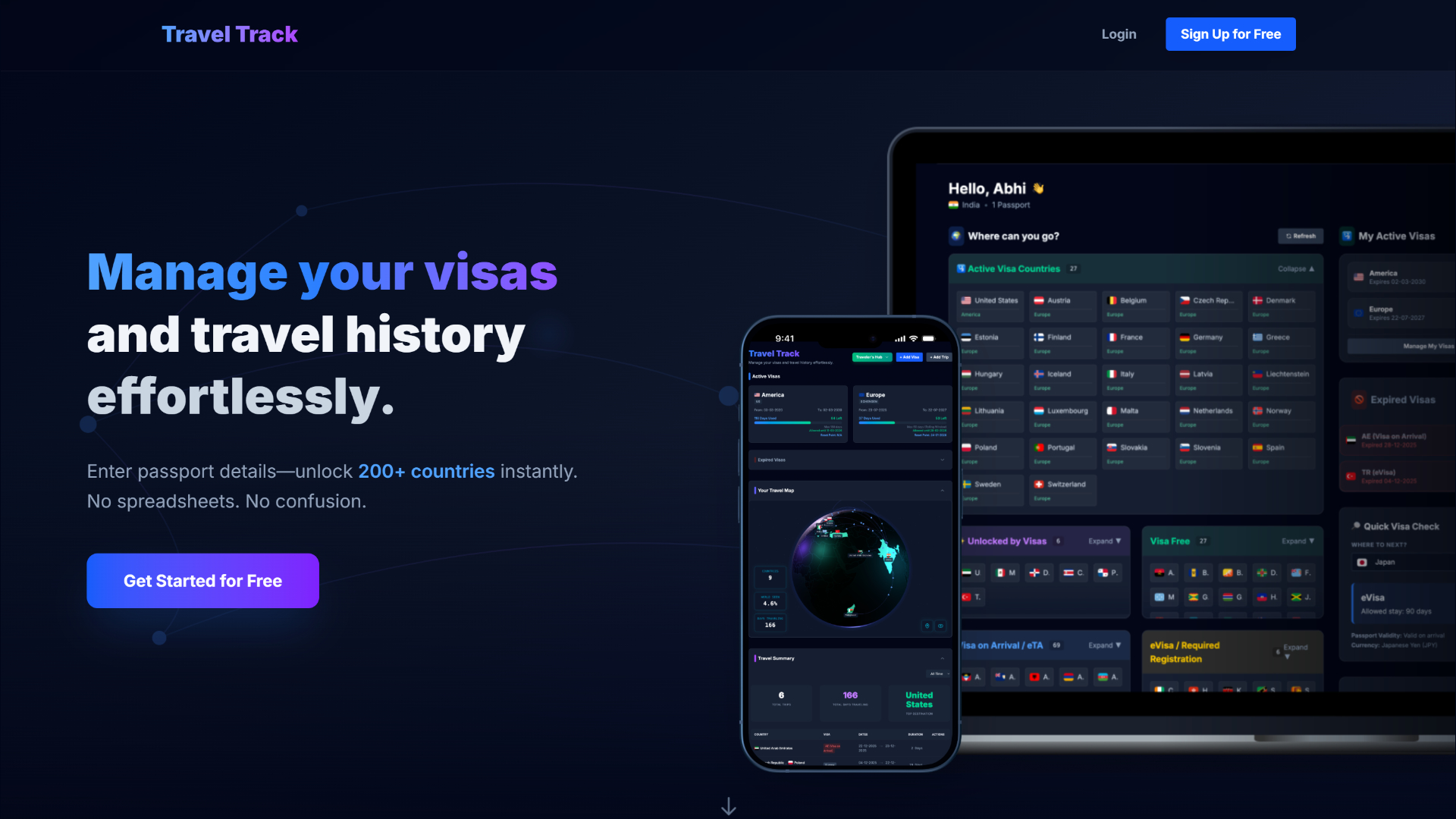
After logging in, users immediately see:
- Countries they can visit based on their passport
- Clear separation between visa-free, visa-on-arrival, and visa-required destinations
- A quick-check widget for instant calculations
Users can:
- Add visas with rules like 90/180
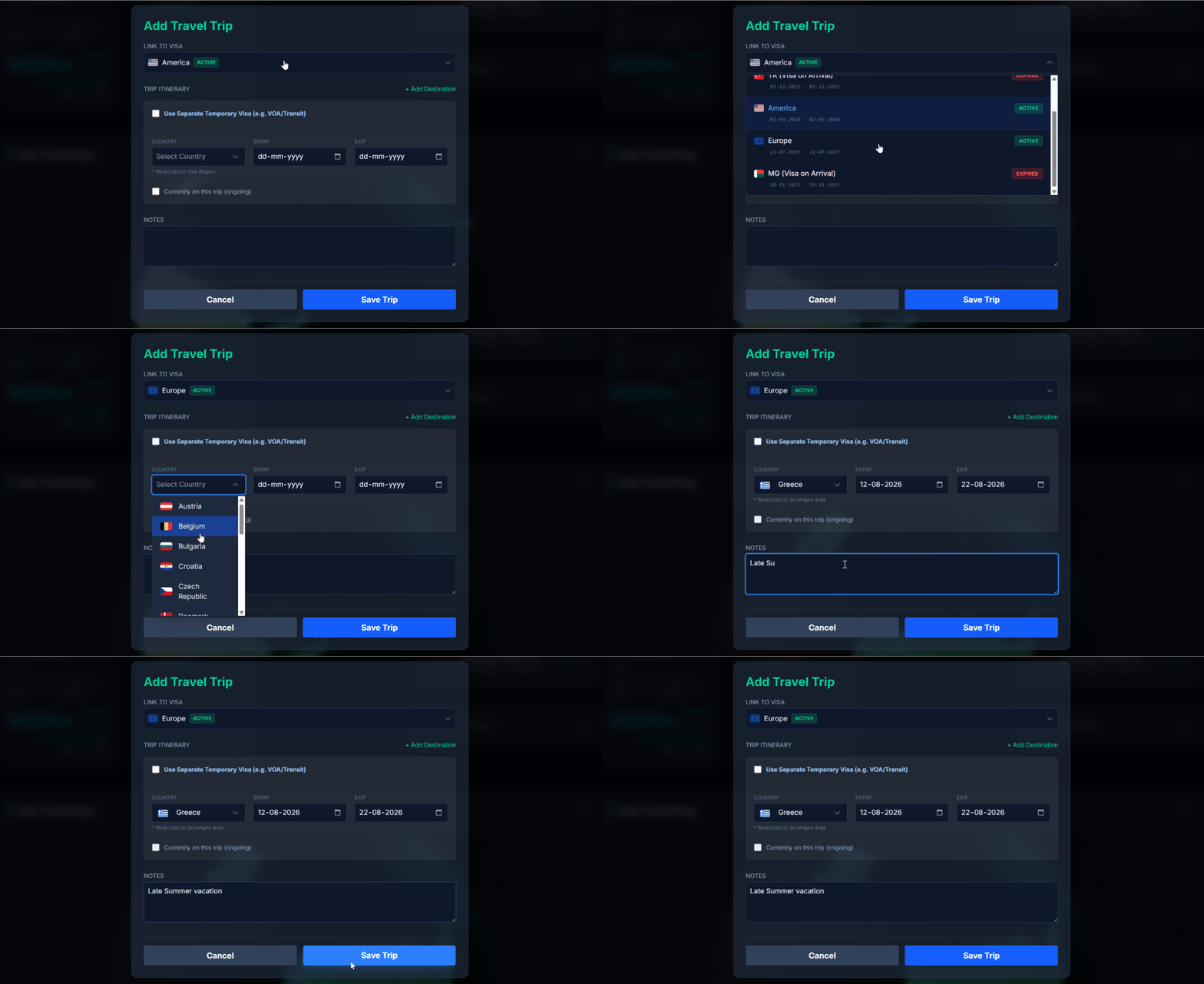
- Add trips and link them to visas
- Handle visa-free travel, visa-on-arrival, and multi-leg journeys in one flow
Trips are visualized both in a dashboard and on the 3D globe, making calculations transparent and understandable.
Free Tools & Document Vault
The landing page includes a free visa days calculator that works without signup.
Logged-in users also get a document vault, allowing them to store images or files they may want to reference during planning.
Future plans include:
- OCR-based data extraction
- Multi-language support
- Improved accessibility
Challenges, Tradeoffs & Reality Checks
The hardest part so far has been learning and building at the same time. Almost everything is new, but I’m also trying to apply everything I’ve learned over the years into a single product.
I also underestimated the scope. What started as a personal calculator kept growing — scope creep is very real.
Some areas I’m intentionally holding back on:
- Pricing and monetization
- OCR implementation
- Marketing strategy
- Offline support
- Native iOS and Android apps
Each deserves thoughtful planning, not rushed execution.
Current State of the App
What works well:
- Travel days calculator
- Visa and trips database
- Core tracking logic
What’s still rough:
- Dashboard visuals
- Profile polish
- Email alerts
Planned but not built yet:
- Multi-language support
- Advanced notifications
What’s Next
The next milestone is opening the project to the outside world:
- Reaching out to early adopters
- Gathering real user feedback
- Improving SEO and discoverability
Devlog #2 will focus on:
- Engaging with my network and community
- Early feedback
- How external input starts shaping the product
Personal Reflection
Seeing how much progress has been made in just a few weeks feels amazing. Every change still feels significant — like watching something grow rapidly.
I know this phase won’t last forever, so I’m trying to enjoy it without letting the scope become overwhelming.
One thing that’s surprised me most is how viable solo development feels in 2026. Access to tools, platforms, and information has made it possible to build serious products alone. The internet isn’t the wild west anymore — and that’s both a good and a bad thing.
I’ll let the reader decide.